

Imagine you are cruising down a highway at 70 mph, reclining in your seat while your car handles the navigation. Suddenly, the steering wheel jerks violently to the left, or the brakes slam on for no apparent reason. You didn’t do it. The car’s software didn’t “decide” to do it. Someone miles away, sitting behind a glowing monitor, just took control of your life.
As we shift from traditional driving to Autonomous Vehicles (AVs) and Intelligent Transportation Systems (ITS), we aren’t just building smarter cars; we are building rolling data centres. While the promise of self-driving technology includes drastically fewer accidents and optimised traffic flow, it also opens a Pandora’s box of cybersecurity vulnerabilities that the world is only beginning to understand.
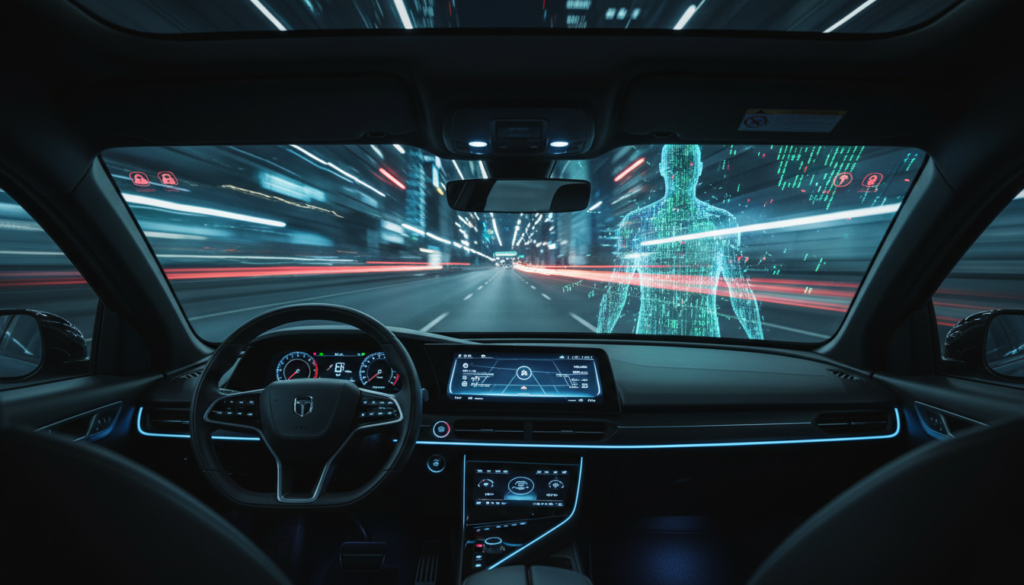
The Expanding Attack Surface
In a traditional vehicle, the “attack surface” was limited to physical access. To steal or sabotage a car, you usually needed to be inside it. Today, an autonomous vehicle is a web of interconnected systems: LiDAR, RADAR, GPS, V2X (Vehicle-to-Everything) communication, and over-the-air (OTA) software updates.
Each of these connection points is a potential entry for a hacker. A “sensor spoofing” attack, for instance, can trick a car’s vision system into seeing a stop sign where there is none or, worse, ignoring an actual obstacle. Even more chilling is the prospect of a “fleet-wide” hack, where a vulnerability in a manufacturer’s central server could allow a malicious actor to disable thousands of vehicles simultaneously, paralysing an entire city’s infrastructure.
Beyond the Car: The Infrastructure Threat
Cybersecurity in this sector isn’t just about the individual vehicle. The “smart city” of the future relies on intelligent transportation systems where traffic lights, toll booths, and emergency services communicate with cars in real-time.
If a hacker gains access to the ITS network, they could manipulate traffic signals to create “green light” corridors for criminal escapes or trigger city-wide gridlock. The transportation system is becoming a critical piece of national infrastructure, making it a prime target for state-sponsored actors and cyber-terrorists.
The Defence: Building Digital Fortresses
So, how do we stay safe? The industry is moving toward a “security by design” philosophy. This means cybersecurity isn’t an afterthought or a “patch” applied later; it is baked into the hardware and software from day one.
Key strategies include:
- Hardware Security Modules (HSM): Dedicated chips that handle encryption and secure boot processes, ensuring only authorised software can run.
- Zero Trust Architecture: Treating every signal—whether from a sensor or a roadside unit—as potentially hostile until verified.
- AI-Driven Anomaly Detection: Using machine learning to monitor the vehicle’s internal network (CAN bus) for any patterns that look like a hack rather than a standard command.
The Road Ahead
The race for autonomous transportation is no longer just about who has the best AI or the longest battery life; it’s about who has the most unshakeable security. As we hand over the keys to the algorithms, our safety will depend on the invisible shields we build around them. The future of mobility is connected, but it must also be protected.
Leave a Reply