
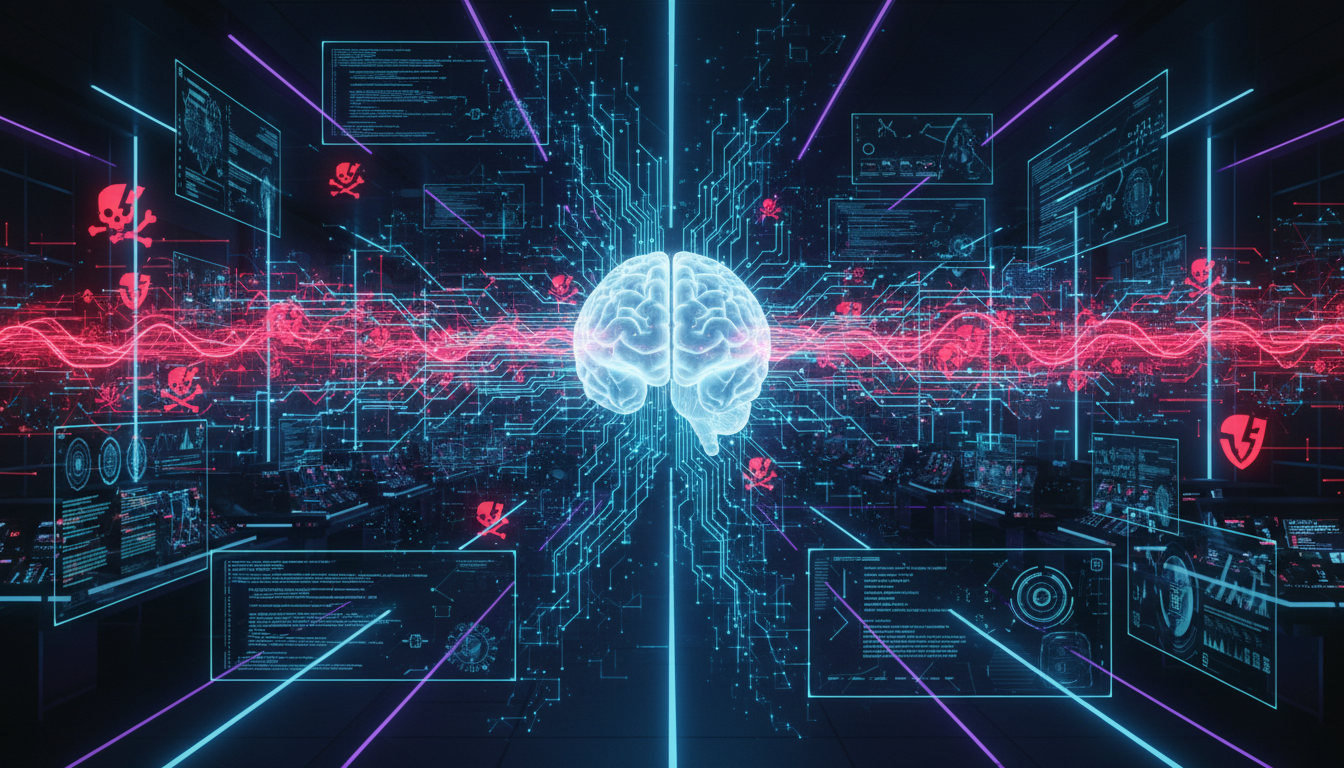
In the early days of the internet, cybersecurity was a game of “cat and mouse” played with static rules. If a virus had a specific digital fingerprint, or “signature,” the firewall blocked it. But as the digital landscape expanded into a sprawling metropolis of cloud computing, IoT devices, and remote work, the “mouse” evolved. Modern cyber threats don’t just knock on the front door; they shape-shift, mimic legitimate users, and wait in silence for months before striking. Entering this high-stakes arena is machine learning (ML), the silent sentry that is transforming threat detection from a reactive chore into a predictive science.
The Shift from Signatures to Shadows
Traditional security systems are essentially digital encyclopedias of known threats. If a piece of malware isn’t in the book, it gets through. This left a massive vulnerability known as “zero-day” attacks—threats so new that no signature exists yet. Machine learning flips this script. Instead of looking for what a threat looks like, ML looks at how a system behaves.
By training on massive datasets of “normal” network traffic, ML algorithms create a baseline of institutional health. They understand the typical login times of an engineer in Berlin, the usual data transfer volumes of a marketing team in New York, and the standard communication protocols between servers. When an anomaly occurs—perhaps a sudden burst of encrypted data leaving the network at 3:00 AM—the ML sentry flags it instantly. It doesn’t need to recognise the “face” of the intruder; it only needs to notice that someone is walking through the hallway in the dark.

Speed: The Ultimate Currency
In cybersecurity, time is measured in microseconds. A ransomware strain can encrypt a library of millions of files in minutes. Human analysts, no matter how skilled, cannot monitor thousands of data points per second across a global enterprise. Machine learning thrives in this volume.
Algorithms like Random Forests and Neural Networks can ingest telemetry from across an entire infrastructure, correlating seemingly unrelated events. For instance, a failed login attempt in one department and a minor configuration change in another might seem like noise to a human. ML sees the pattern, connecting these dots to identify a coordinated “low and slow” attack before the final payload is delivered. This ability to automate the initial triage allows human “threat hunters” to focus their expertise on the most sophisticated risks, effectively acting as a force multiplier for overstretched security teams.
The Arms Race: AI vs. AI
However, the role of machine learning in threat detection is not a one-sided victory. We are entering an era of “adversarial machine learning,” where hackers use the same technology to probe defences. Attackers use ML to automate phishing campaigns, creating emails that are indistinguishable from humans, or to “poison” the training data of security models so that they learn to ignore certain types of malicious behaviour.
The battlefield is no longer just code; it is the data itself. To stay ahead, threat detection systems must now be “self-learning,” constantly updating their models to account for new tactics. The future of cybersecurity is a literal “clash of the titans”—autonomous defence systems pitted against autonomous offensive tools.
The Human Element in a Machine World
Despite the power of algorithms, the role of machine learning is not to replace the human analyst but to empower them. ML provides the “what” and the “when,” but humans are still required for the “why” and the “how.” Investigative intuition, ethical considerations, and strategic response remain firmly in human hands.
As we move forward, the harmony between human intelligence and machine learning will define the safety of our digital world. The silent sentry is awake, watching the shadows, and learning every second. In the war against cyber threats, we finally have a partner that never sleeps.
Leave a Reply