
Why Your Fingerprint Might Be Your Best Password—Or Your Worst Nightmare
We live in an age of passwords. Dozens of them. Long ones with special characters, numbers, and that one uppercase letter you always forget. We write them down, reuse them, and inevitably forget them. It’s exhausting—and it’s exactly why biometric authentication feels like a gift from the tech gods.
Your fingerprint is unique. Your face is unmistakable. Your iris pattern is virtually impossible to replicate. So why not use them as your keys to the digital kingdom? Millions of people already do, unlocking their phones with a glance and accessing their bank accounts with a touch. It sounds perfect. But like most things that sound too good to be true, biometric authentication comes with a twist.
The Promise: A World Without Passwords
Let’s start with the good news. Biometric authentication is genuinely revolutionary.
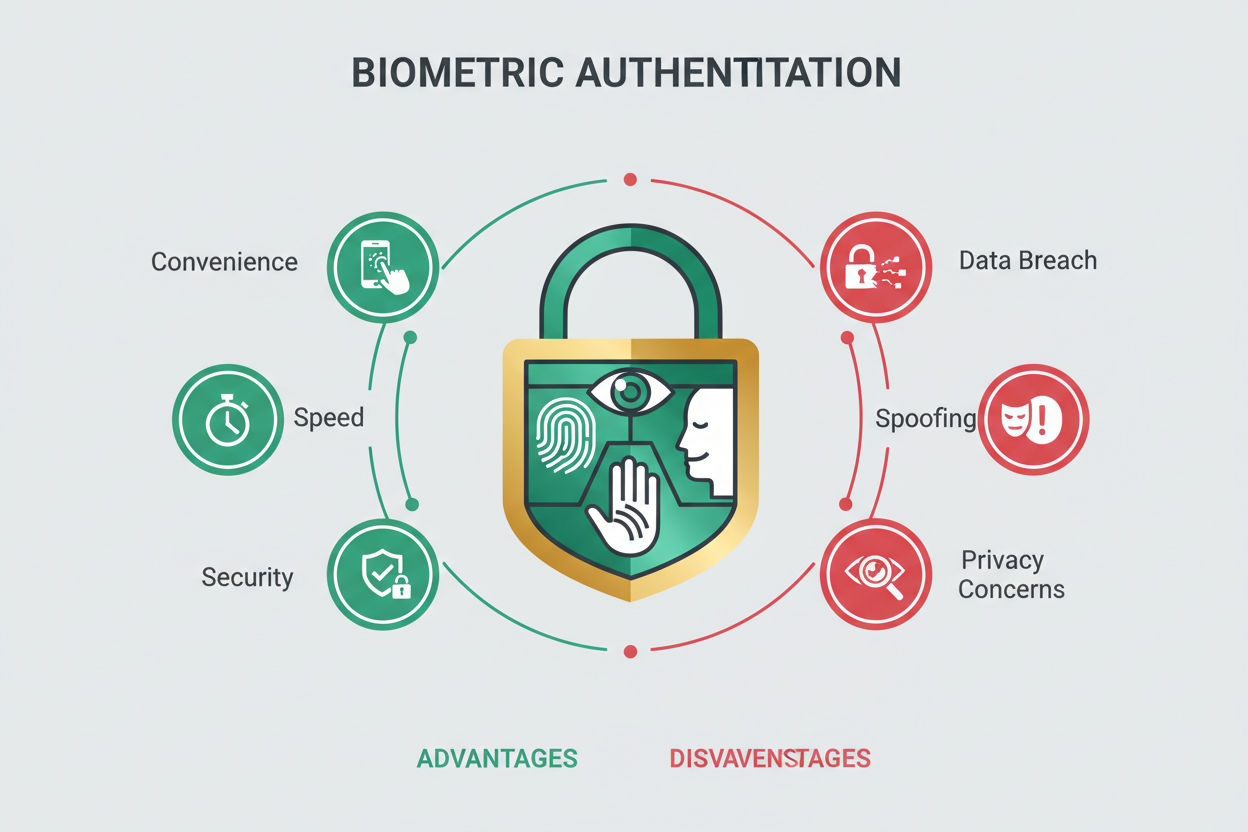
First, there’s convenience. No more frantically searching for that sticky note with your password. No more resetting credentials at 2 AM because you’ve locked yourself out. A quick scan of your face or fingerprint, and you’re in. For users, this is a game-changer. For businesses, it means fewer support tickets and happier customers.
Second, there’s security. Unlike passwords, which can be guessed, phished, or brute-forced, your biometric data is inherently tied to you. You can’t accidentally share your fingerprint in a data breach the way you might share a password. You can’t write it on a Post-it note. You can’t use the same one everywhere (well, you could, but that’s the whole point—you don’t have to).
Third, there’s speed. Biometric authentication is fast. Faster than typing. Faster than remembering. In a world obsessed with frictionless experiences, this matters. Banks, airports, and workplaces are adopting biometric systems because they work—and because users love them.
The Reality: Your Body as a Liability

But here’s where things get complicated.
Your biometric data is permanent. You can change a password. You cannot change your fingerprint. If your biometric information is compromised, you’re not just dealing with a security breach—you’re dealing with a permanent vulnerability. Imagine a hacker gaining access to your iris scan. You can’t just get a new iris. This is the fundamental paradox of biometric security: the very thing that makes it secure also makes it terrifying.
Biometric systems can be spoofed. Despite their reputation for invulnerability, biometric systems have been fooled. Researchers have unlocked phones using high-resolution photos of faces. Fingerprint sensors have been tricked with latex moulds. Iris scanners have been defeated with contact lenses. The technology is improving, but it’s not infallible. And unlike a password, you can’t simply change your biometric if someone figures out how to fake it.
Privacy is a minefield. Every time you use facial recognition at an airport or a fingerprint scanner at work, you’re generating data. Where does it go? Who has access to it? How long is it stored? These questions don’t have clear answers. Governments and corporations are building massive databases of biometric information, and the regulations protecting that data are still catching up. In some countries, there are virtually no rules. In others, the rules are vague. The potential for misuse—from surveillance to discrimination—is enormous.
False positives and false negatives are real problems. Biometric systems aren’t perfect. A false positive means someone else gets access to your account. A false negative means you can’t access your own account. Both are problems, but they’re different kinds of problems. And they disproportionately affect certain groups. Studies have shown that facial recognition systems are less accurate for people with darker skin tones, creating a security gap that’s also an equity issue.
Biometric data is valuable to criminals. Passwords are worthless once they’re compromised. Biometric data? That’s gold. A stolen fingerprint or face scan can be used to impersonate you, commit fraud, or gain access to your most sensitive accounts. And unlike a password, you can’t just change it and move on.
The Middle Ground: A Balanced Approach
So what’s the answer? Should you embrace biometric authentication or reject it entirely?
The truth is more nuanced. Biometric authentication isn’t inherently good or bad—it’s a tool, and like all tools, it depends on how it’s used.
Use biometrics for convenience, not security. Your phone? Great place for biometric authentication. Your bank account? Maybe not. The stakes are different. For low-risk applications, biometrics are fantastic. For high-risk applications, they should be part of a layered security approach, not the only layer.
Demand transparency. Before you use a biometric system, ask questions. Where is your data stored? Who has access to it? How long is it kept? What are the security measures protecting it? If companies can’t answer these questions clearly, that’s a red flag.
Support regulation. Biometric data is too important to be left to the free market. We need clear rules about how biometric information can be collected, stored, and used. We need standards for accuracy and security. We need oversight. This isn’t about stifling innovation—it’s about protecting people.
Use multi-factor authentication. Don’t rely on biometrics alone. Combine them with passwords, security keys, or other authentication methods. This way, even if one factor is compromised, you’re still protected.
The Future
Biometric authentication isn’t going away. It’s becoming more sophisticated, more accurate, and more integrated into our daily lives. The question isn’t whether to use it, but how to use it wisely.
The technology itself is neutral. What matters is how we implement it, regulate it, and protect the data it generates. The fingerprint that unlocks your phone is convenient and secure—until it isn’t. The facial recognition system at the airport is efficient and effective—until it’s used for mass surveillance.
The risks and rewards of biometric authentication aren’t predetermined. They’re choices we make, collectively and individually, about the kind of future we want to build. Choose wisely.
Leave a Reply