
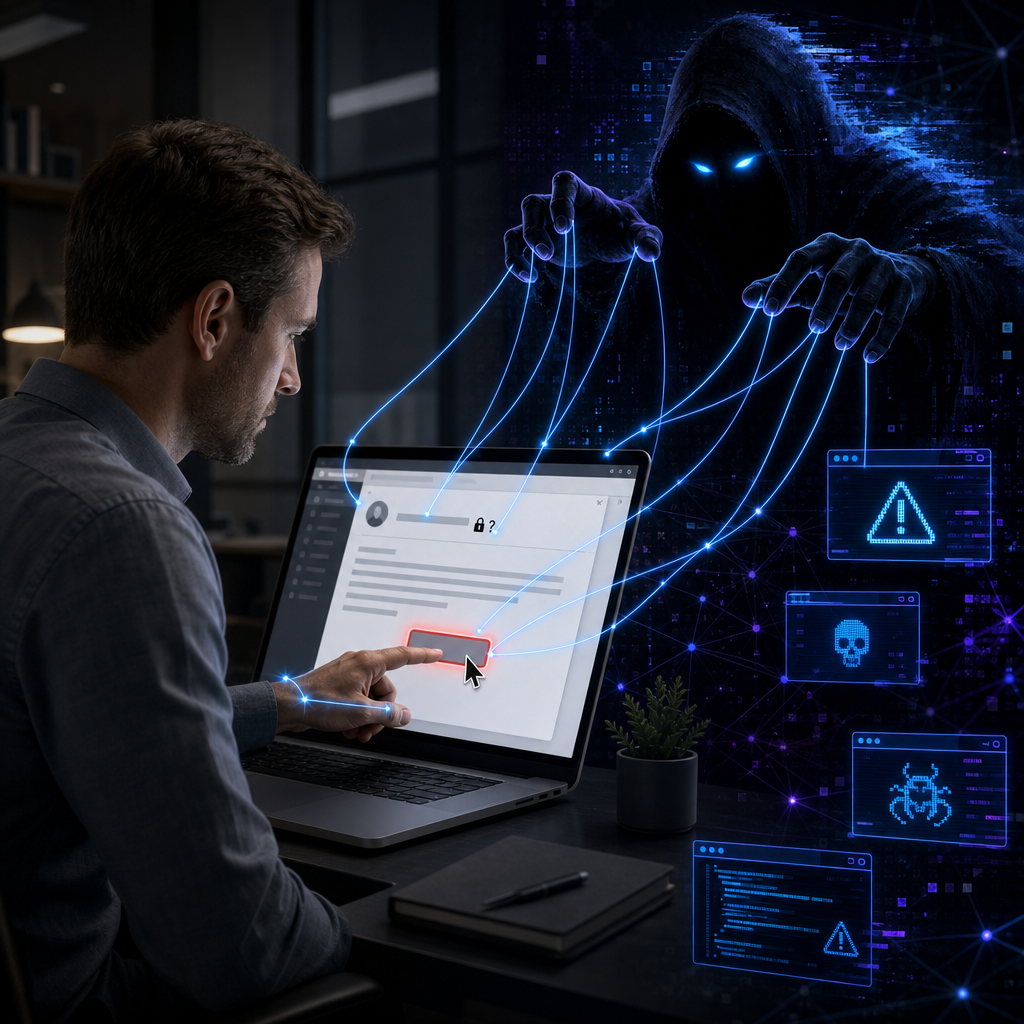
In the digital age, the most dangerous weapon isn’t a zero-day exploit or a sophisticated piece of malware. It’s a carefully crafted message that plays on the way your brain works.
Cybercriminals have become amateur psychologists. They study human behaviour with the same intensity that security researchers study code. And they’re winning—because while technology improves, human psychology remains remarkably consistent.
The Human Firewall Is Full of Holes
Traditional cybersecurity focuses on technical defences: encryption, firewalls, and multi-factor authentication. Yet studies consistently show that over 80% of successful breaches involve some form of human error or manipulation. This isn’t because people are careless. It’s because attackers have learnt to weaponise the very mental shortcuts that help us navigate daily life.
These shortcuts—known as cognitive biases—make us efficient but also vulnerable.

Authority: The Boss Always Wins
One of the most powerful psychological levers is authority. When an email appears to come from the CEO or a senior executive, our brains are wired to comply quickly. This is why Business Email Compromise (BEC) attacks remain one of the most lucrative forms of cybercrime.
Attackers don’t need to break into systems. They simply impersonate someone with power and create urgency: “Wire the funds now—the deal closes today.” The combination of authority + time pressure short-circuits critical thinking. Victims often report feeling they had no choice but to act immediately.
Fear and Urgency: The Brain’s Alarm System
Fear is one of the fastest ways to bypass rational thought. Phishing emails frequently use threats like account suspension, legal action, or security breaches to trigger the fight-or-flight response.
When your brain perceives a threat, it prioritises speed over accuracy. This is why messages like “Your account will be locked in 24 hours” or “We’ve detected suspicious activity” are so effective. The victim isn’t thinking about verifying the sender—they’re thinking about avoiding disaster.
Reciprocity and Liking: We Want to Help People We Like
Humans are social creatures. We feel obligated to return favours (reciprocity), and we’re more likely to trust people we like or find similar to ourselves.
Attackers exploit this through pretexting—creating fake personas that build rapport. A “vendor” who remembers a previous conversation, or a “colleague” who shares the same alma mater, can dramatically increase the success rate of a social engineering attempt. The victim isn’t just responding to a request; they’re responding to a relationship.
Scarcity and FOMO: The Fear of Missing Out
Limited-time offers, exclusive opportunities, and “only a few spots left” messages trigger our fear of missing out. In the cyber world, this might appear as a fake job offer, an investment opportunity, or a “one-time” security update that must be completed immediately.
The brain hates uncertainty and loss. When something appears both valuable and time-sensitive, we often act before we verify.
The Illusion of Control and Overconfidence
Many professionals believe they’re too smart to fall for scams. This overconfidence is itself a vulnerability. Research shows that people who rate themselves as highly cybersecurity-aware are sometimes more likely to click suspicious links because they assume they can spot fakes.
Attackers count on this. They craft messages that feel just legitimate enough to pass a quick glance from someone who thinks they’re immune.
Real-World Impact: When Psychology Meets Profit
The psychological approach is devastatingly effective because it scales. A single well-written phishing campaign can target thousands of people at almost zero cost. Even a 1-2% success rate can yield massive returns.
High-profile incidents—from the Twitter Bitcoin scam to massive BEC frauds—almost always contain strong psychological elements. The attackers didn’t need advanced technical skills. They needed to understand what makes people click, reply, or transfer money.
Defending Against Psychological Attacks
The good news is that awareness changes everything. Organisations that invest in regular, realistic security awareness training see dramatic reductions in successful attacks. The most effective programmes don’t just teach rules—they simulate real psychological tactics so employees experience the manipulation firsthand.
Key defensive strategies include the following:
-
Slowing down when urgency or authority is present
-
Verifying requests through secondary channels (especially financial ones)
-
Creating a culture where questioning suspicious requests is encouraged, not punished
-
Using technology that flags suspicious patterns while still training humans to think critically
The Future of the Battle
As artificial intelligence improves, attackers will create even more personalised and convincing messages. Deepfake voice calls and hyper-realistic phishing emails are already emerging. The psychological arms race is accelerating.
Yet the fundamental truth remains unchanged: technology will never fully replace the need for human judgement. The organisations that thrive will be those that treat cybersecurity not just as a technical problem but as a human one.
The next time you receive an urgent email from your “boss” or a warning about your account, pause. Ask yourself: Is this triggering fear, authority, scarcity, or reciprocity? That single moment of psychological awareness might be the difference between a close call and a catastrophic breach.
Because in cybersecurity, the most sophisticated defence isn’t a new piece of software. It’s a mind that understands how it can be tricked.
Leave a Reply